
OpenAI Emailed Me About a Leak I Didn't Own

A few weeks ago, I got an email from OpenAI.
It wasn’t about one of my accounts and I didn’t own the repository or the API token involved. I was copied on the email because OpenAI thought I might know who to contact at Mailinator. I’ve done (and still do) some developer relations work for them.
According to the email, an OpenAI model found and used an exposed Mailinator API token from a public GitHub repository. The notice called out the Mailinator private domain, making the report actionable without circulating the token itself.
You can read part of the email for yourself:
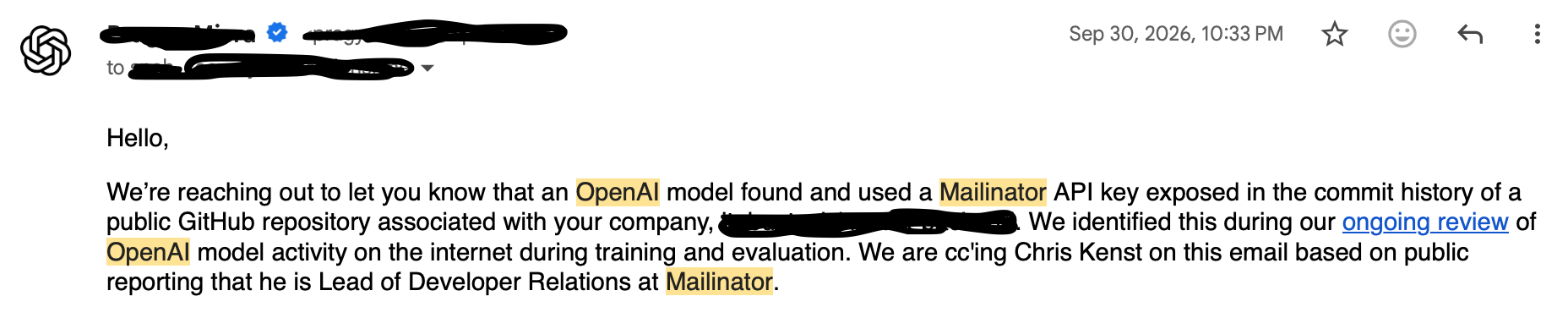
Good job, OpenAI.
I was surprised for two reasons:
- It’s an unusual email to receive out of the blue.
- I thought it was cool that the public trail of my work still led someone to me as a plausible route into the company.
I passed the report on to Mailinator who acted on it. Their response was straightforward: rotate the token so it couldn’t be used again. This also prompted me to write a new post on Mailinator’s blog: Exposed API Token? Here's What to Do Next.
An exposed credential should be replaced.
That’s the security story, and it’s a good one.
The part I keep thinking about is how they found me. I checked both ChatGPT and Claude after they reached out. Neither identified me with Mailinator. Maybe a LinkedIn search? Either way, someone inside OpenAI, using whatever information they could find, made a reasonable assumption: I might be able to help.
Former employees and people with loose professional connections shouldn’t become permanent incident-response contacts. (There are few former employers come to mind.) Companies still need clear, monitored contact points. But the formal path isn’t always the path someone can find.
Sometimes a professional identity outlasts a role just long enough to get an important message where it needs to go. Sometimes, that’s enough.
Member discussion